

How to Stop Eating the Same 5 Meals Every Week (For Real)
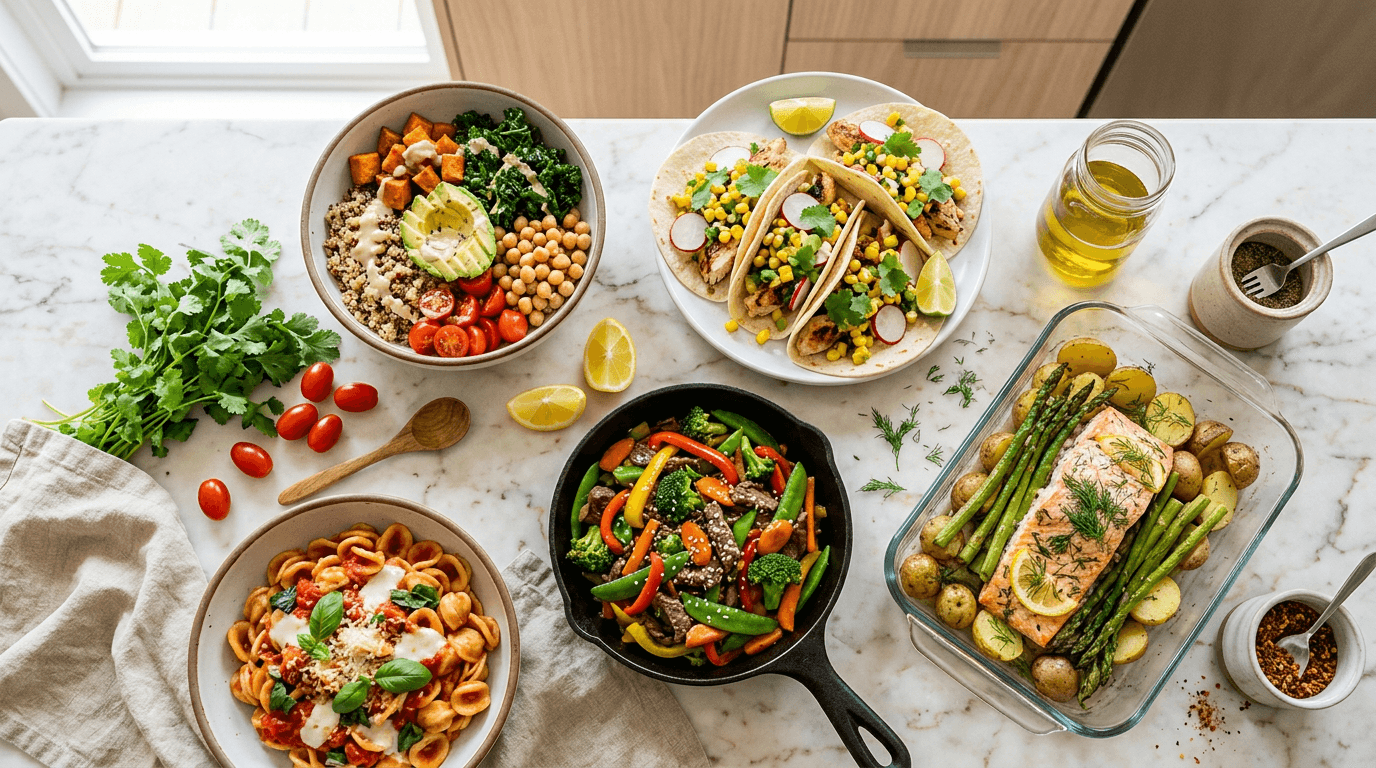
You already know which five meals are coming this week. Pasta on Tuesday. Chicken stir-fry on Thursday. That same baking tray salmon you've made forty-something times. They're reliable, fast, and nobody complains. But somewhere between the third consecutive taco night and realising you haven't cooked anything new in three months, the routine stops feeling like a feature and starts feeling like a trap.
You're far from alone. A 2023 study by McCain found that six in ten people eat the same dinner up to four times a week, citing tiredness and lack of planning as the main culprits. The average household cycles through roughly 15 to 20 dishes total, according to a Healthline-cited physician. So yes, the dinner rut is real, widespread, and completely fixable without spending your Sunday rebuilding your entire relationship with cooking.
Here are five strategies that actually work.
Steal from your saved recipes (instead of scrolling past them)
Most of us have a graveyard of bookmarked recipes: Instagram reels double-tapped at midnight, TikTok videos saved in a folder that hasn't been opened in weeks, YouTube recipe channels subscribed to and forgotten. The food inspiration exists, it just never makes it to the table.
The gap is activation energy, not motivation. Pulling a recipe from a saved video, retyping ingredients by hand, and reverse-engineering a shopping list is enough friction to send most people back to the pasta drawer. One fix: use a tool that imports the recipe directly from the URL and drops the ingredients straight into your meal plan. MenuMagic does this for Instagram, TikTok, YouTube, and recipe sites, so that Ottolenghi dish you saved six months ago can actually become Wednesday dinner instead of a permanent aspiration.
Swap one ingredient, not the whole meal
Variety doesn't require reinvention. If you make a grain bowl every week, change the grain. Swap white rice for farro, barley, or freekeh. If you do a stir-fry, rotate the protein: tofu one week, prawns the next, beef the week after. The dish stays familiar enough to require zero extra cognitive load, but it tastes different enough to break the monotony.
A registered dietitian writing for Real Simple in March 2026 made the same point: eating locally and seasonally used to force ingredient rotation naturally. Now that everything is available year-round, you have to build that rotation yourself. A simple rule (one new ingredient per week) adds up to 52 new flavour experiences over a year without any dramatic overhaul.
This is also the logic behind the 3-3-3 method, outlined by Stronger U Nutrition: choose three proteins, three fat sources, and three carbs for the week, then mix them differently each day using different spices and sauces. You end up with far more variety than it sounds like on paper.
Plan with a theme, not a recipe
Themed nights get a bad reputation for being basic (yes, Taco Tuesday exists), but they're actually a useful cognitive shortcut. Instead of deciding "what should I make Monday?" you decide "what kind of thing should I make Monday?" That's a much smaller decision.
The key is keeping the theme loose while rotating what's inside it. "Asian-inspired" night could be Thai green curry one week, Japanese teriyaki salmon the next, Korean bibimbap the week after. The theme is a guardrail, not a prescription. 10 common mistakes in weekly meal planning often include over-specifying every meal in advance, which makes the whole plan feel rigid and easy to abandon by Wednesday.
Pick three or four recurring themes and rotate the actual dishes within them. You'll plan faster and cook more adventurously.
Let leftovers become different meals
Leftovers don't have to be tomorrow's sad lunch version of tonight's dinner. Roasted vegetables from Monday can go into a frittata on Wednesday. Leftover rice becomes fried rice. Grilled chicken turns into a grain salad or gets shredded into tacos.
This is ingredient-level thinking rather than meal-level thinking, and it doubles your variety without doubling your cooking time. If the "same five meals" problem is partly about feeling like you're eating the same thing twice, this reframes the leftover entirely. MenuMagic's Leftover Recipe Generator takes what you actually have in the fridge and generates new recipes from it, which is genuinely useful when you've got half a butternut squash, some chickpeas, and not much else.
Outsource the "what" so you can focus on the "how"
The mental load of deciding what to cook is often harder than the cooking itself. Decision fatigue is a well-documented phenomenon, and by 6pm on a Tuesday it hits hard. Having to generate meal ideas from scratch, check dietary needs, confirm you have the ingredients, and figure out a shopping list is a lot to ask of a tired brain.
AI meal planning tools like MenuMagic build the week's menu for you in seconds, accounting for dietary preferences, allergies, how long you want to spend cooking on a given night, and even generating a shopping list organised by supermarket aisle so the shopping trip is faster too. The result is a varied weekly plan you didn't have to think up yourself, which removes the single biggest reason most people default to the same rotation.
If you're someone who eats well when things are organised and defaults to takeaway when they're not, having the plan done for you just removes the friction between intention and execution.
Breaking a meal rut doesn't require a culinary identity transformation. It usually just requires removing the specific friction points that keep you reaching for familiar meals. Start with one change this week: import that saved recipe, swap one ingredient, or try a themed night with a different dish inside the theme. Small shifts compound. Six months from now, you'll have a rotation that actually feels like one.
Put this method to work
Turn what's already in your fridge into recipes, or grab the printable grocery list.
More posts
 MenuMagic
Recipes
Vegan recipes
Vegetarian recipes
Keto recipes
Protein recipes
Lactose-free recipes
Gluten-free recipes
Low glycaemic index recipes
Resources
Blog
Recipe Generator
Leftovers Recipe Generator
Printable Shopping List
Kitchen Measurement Converter
Calorie Calculator
Seasonal Fruits and Vegetables
Our other apps
WindNow
Our other apps
WindNow


© 2026 MenuMagic.
All rights reserved.