

How to Cook With What's in Your Fridge and Cut Food Waste
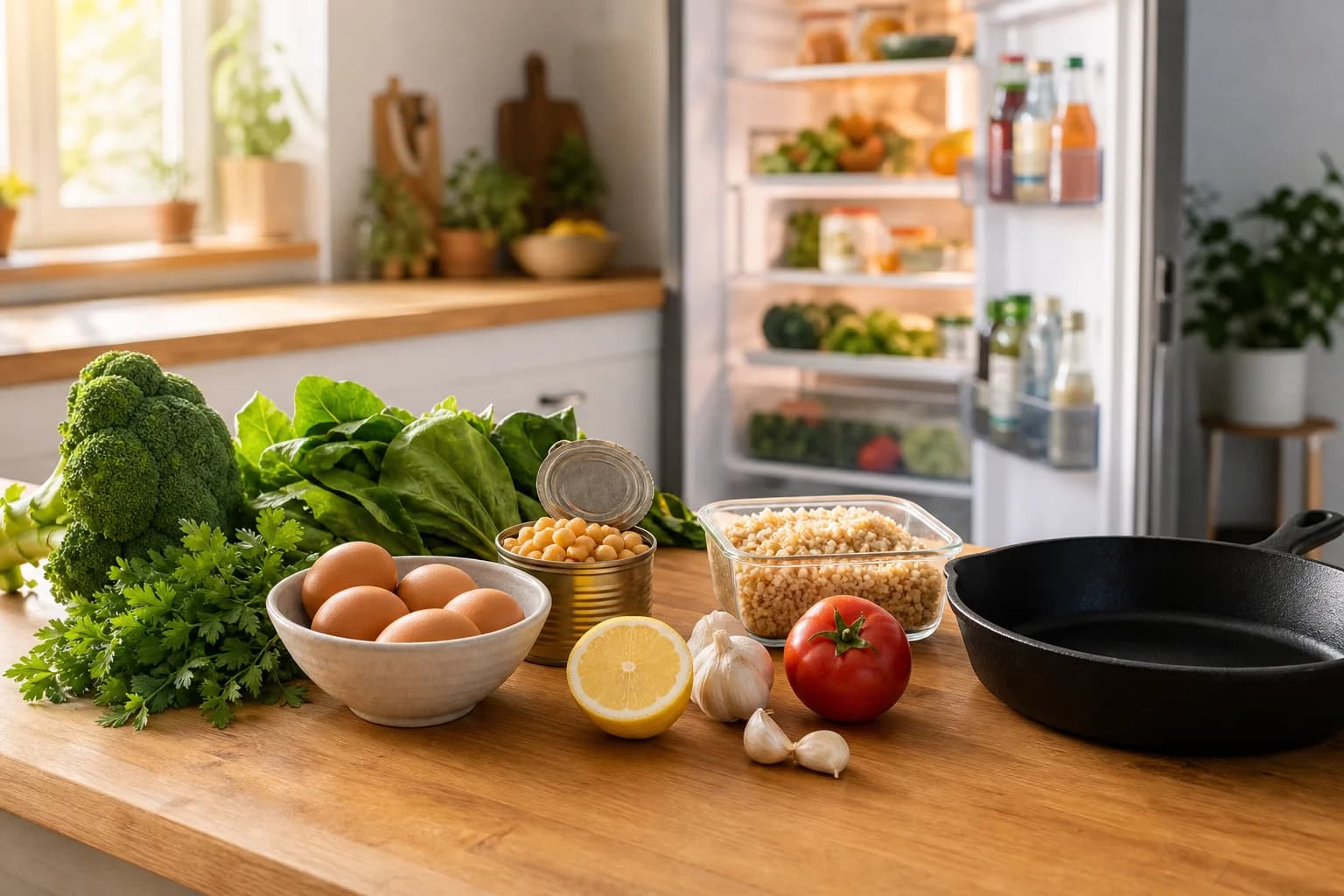
The average American household throws away roughly 6.2 cups of edible food every week, according to a 2023 MITRE-Gallup survey of more than 9,000 households. For a family of four, the EPA estimates that adds up to nearly $3,000 a year in wasted groceries. That is not a supply chain problem. It is a planning problem, and it almost always starts in the fridge.
The real culprit is not laziness or bad intentions. It is the gap between buying ingredients and actually knowing what to do with them before they go bad. Here is how to close that gap.
Do a quick fridge audit before you do anything else
Before opening a recipe app or searching "dinner ideas," spend two minutes pulling everything visible out of your fridge and onto the counter. Group things roughly: proteins like eggs, meat, tofu, and cheese; vegetables and herbs; leftovers; condiments; and anything close to expiring.
This simple act resets your mental inventory. Most people significantly underestimate what they have because items get pushed to the back and forgotten. Once everything is in front of you, meal ideas become much easier to land on.
A good rule of thumb: anything wilting, close to its use-by date, or already cooked goes to the front. These are your "use first" ingredients, and they should drive what you cook tonight or tomorrow.
Five flexible meals that work with almost anything
Certain meal formats are specifically good at absorbing random ingredients without demanding precision. These are worth memorising:
Fried rice. Day-old rice is actually better than fresh. Add any leftover protein, a handful of vegetables, soy sauce, and eggs. Done in ten minutes. Almost nothing disqualifies here: broccoli, frozen peas, shredded chicken, diced tofu, even a lonely ear of corn.
Frittata. Eggs act as the binder for whatever you have: cheese, leftover roasted vegetables, cured meats, potatoes. Start it on the hob, finish it under the grill for 3 minutes. It is one of the most forgiving formats in cooking.
Sheet pan everything. Toss whatever vegetables you have, even slightly limp ones, in olive oil, salt, and pepper. Roast at 220°C for 20-25 minutes. Serve over grains or with a fried egg on top.
A grain bowl. Cook whatever grain is in your pantry: rice, farro, quinoa, barley. Build a bowl with whatever proteins and vegetables you have. A simple sauce from pantry staples like tahini, lemon, and garlic, or soy, sesame, and rice vinegar, makes it feel intentional rather than improvised.
Soup or a simple stew. Vegetable scraps, leftover cooked meat, a can of beans or tomatoes, and stock, or even just water with seasoning. Soup is the original "use everything" meal. A November 2025 CNN wellness report on reducing kitchen waste specifically highlighted soups and stews as the single most effective fridge-clearing cooking format.
Pantry staples that make fridge cooking work
Cooking with only fridge leftovers often fails because there is no "glue": the pantry basics that turn random ingredients into a coherent dish. Keep these stocked:
- Tinned tomatoes and tinned beans, such as chickpeas, black beans, or lentils
- Rice, pasta, or any grain
- A quality stock or bouillon
- Soy sauce, fish sauce, or Worcestershire
- Olive oil, garlic, and onion
- A few vinegars and hot sauce
These do not expire quickly, so they are always there. With them, almost any set of fridge ingredients can become a legitimate meal.
The planning problem behind the waste problem
Most food waste at home does not happen because people cannot cook. It happens because there is no plan connecting purchases to meals. You buy a bunch of coriander for one recipe, use two sprigs, and the rest slowly dies in a produce drawer. You grab chicken breasts on sale without knowing which night you will cook them.
This is where structured meal planning genuinely changes things. When each ingredient has a designated recipe and day, you actually use what you buy. MenuMagic's AI recipe generator does exactly this. It builds a full weekly meal plan around your preferences and dietary needs, then generates a shopping list organised by supermarket aisle, with "which day you will need it" indicators so you know when each item is needed for freshness. Buying coriander for Wednesday's tacos means you are buying it for something, not just hoping for the best.
MenuMagic also has a dedicated Leftover Recipe Generator: enter up to ten ingredients already in your fridge and the AI builds a recipe around them. It is a practical answer to the exact problem of staring at a half-empty fridge with no idea where to start.
Stop saving recipes you will never make
One underrated contributor to food waste: social media recipe saves that never become actual meals. You see a beautiful pasta on Instagram, save it, buy the specific cheese it calls for, then never find the right moment to cook it. The cheese goes bad.
If you use platforms like Instagram, TikTok, or YouTube for recipe inspiration, the gap between "save" and "cook" needs to collapse. MenuMagic can import recipes directly from those platforms using a URL, extract the ingredients and instructions automatically, and slot them into your weekly plan. Once a recipe is in a planned menu, it actually gets made, and the ingredients you buy for it actually get used. It is a small workflow change with a real impact on how much ends up in the bin.
A few habits worth building
Beyond specific meals and tools, a few consistent habits make a lasting difference:
- Shop with a plan, not a list. A list of ingredients is less useful than a list tied to specific meals. A well-structured grocery checklist built from your actual weekly menu means every item has a purpose.
- Freeze before it is too late. Most proteins freeze well. Soft herbs like parsley and coriander can be blended with olive oil and frozen in ice cube trays. Bread that is going stale makes excellent breadcrumbs or croutons after a quick toast.
- Designate one "clean out the fridge" meal per week. Usually the night before your grocery day, deliberately cook from whatever is left. Fried rice, a frittata, or a grain bowl makes this easy.
Food waste is genuinely expensive and frustrating, but it is also one of the more solvable household problems once you have a system. The goal is not perfection. It is closing the gap between what you buy and what you actually eat, one week at a time.
Put this method to work
Generate a week of recipes from what's already in your fridge, or grab the printable grocery list.
More posts
 MenuMagic
Recipes
Vegan recipes
Vegetarian recipes
Keto recipes
Protein recipes
Lactose-free recipes
Gluten-free recipes
Low glycaemic index recipes
Resources
Blog
Recipe Generator
Leftovers Recipe Generator
Printable Shopping List
Kitchen Measurement Converter
Calorie Calculator
Seasonal Fruits and Vegetables
Our other apps
WindNow


© 2026 MenuMagic.
All rights reserved.