

What Is the 333 Diet? The 3-3-3 Meal Prep Method Explained
Last updated: October 15, 2026
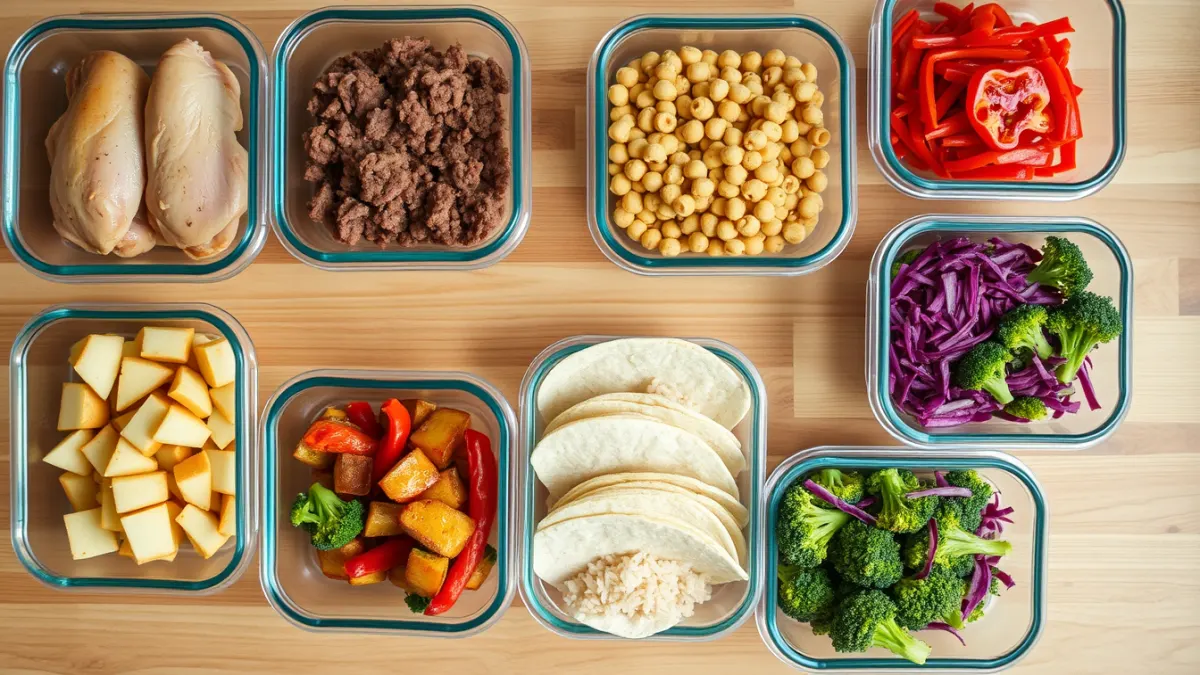
There is no single "333 diet." The name gets used for a few different ideas, none of them a medical diet, none with a known creator. The one this guide covers is a meal prep pattern, usually written 3-3-3: cook 3 proteins, 3 carbohydrates and 3 vegetables in one batch, then mix them into different meals through the week. It is a way to organize cooking, not a calorie plan.
The components stay plain and the sauces do the work. Chicken, rice and broccoli with soy and ginger on Monday. The same chicken with crushed potatoes and harissa yogurt on Thursday.
What is the 3-3-3 meal prep method?
Roasting, boiling and chopping happen once, on prep day. Each evening you take a few components out of the fridge, heat them and add a sauce.
- 3 proteins. Chicken thighs, ground beef, canned chickpeas, eggs, a block of tofu, lentils.
- 3 carbohydrates. Rice, potatoes, pasta, tortillas, couscous, noodles.
- 3 vegetables. Bell peppers, broccoli, zucchini, carrots, red cabbage, green beans. Cooked, raw or a mix.
Each number counts distinct foods, not portions. A big tray of chicken thighs is one protein. A 5 lb bag of potatoes is one carb.
Sauces, spices and cans sit outside the nine: soy sauce, curry paste, pesto, harissa, salsa, canned tomatoes, coconut milk, yogurt, garlic, lemons. Most of them are already in the pantry.
Is the "333 diet" something else?
Sometimes. People also use the name for:
- 3 proteins, 3 carbs, 3 fats. You eat from a short list of nine foods for a while, with vegetables on top. The nutrition coaching company Stronger U described it in 2018 as a way to make food tracking simpler. It is closer to a shopping list than to a cooking plan.
- Three meals, about three hours apart. Breakfast, lunch and dinner at steady times, with no long gaps.
- A three-part habit rule. Three meals a day, three bottles of water by 3 p.m. and three hours of exercise a week.
None of these sets a calorie figure.
3-3-3 meal prep vs the 333 grocery method
The 333 grocery method is a shopping rule: nine core items in the cart, three from each of three food groups, and nothing about when or how you cook them. The 3-3-3 meal prep method is a cooking plan: nine components cooked on one day, meals built from them all week. You can use one without the other.
How to choose your nine components
Pick components that take many flavors. Plain roast chicken works with soy, curry paste, pesto and harissa. Chicken already marinated in teriyaki only works with teriyaki.
For proteins, one meat, one plant protein and one quick option is a good spread. Canned chickpeas and eggs need almost no prep, which keeps Sunday short.
Carbs with different textures give you more kinds of meal. Rice, potatoes and tortillas make a bowl, a plate and something to hold. Three kinds of grain end up tasting like the same dinner.
Choose vegetables that keep. Roasted bell peppers, blanched broccoli and shredded red cabbage hold for days. Salad greens and cooked zucchini go soft within a day, so buy those fresh and add them when you cook.
Season the prep with salt, pepper and oil only. Strong flavors go on at the end, one meal at a time.
A sample week: the Sunday prep
For two people, seven dinners and some leftovers for lunch. One session, about two hours, most of it oven time.
Proteins (3)
- Chicken thighs, roasted on a sheet pan with oil, salt and pepper.
- Ground beef, browned with an onion and nothing else.
- Canned chickpeas, two or three cans, drained. Roast one can until crisp, keep the rest as they are.
Carbohydrates (3)
- Rice, cooked, cooled quickly and portioned.
- Baby potatoes, boiled until just tender.
- A pack of whole wheat tortillas. No cooking needed.
Vegetables (3)
- Bell peppers, cut into strips and roasted on the pan next to the chicken.
- Broccoli, cut into florets and blanched for two minutes.
- Red cabbage, shredded raw and kept in a container in the fridge.
Seven different meals from nine components
- Monday: chicken, rice and broccoli, stir-fried in a hot pan with soy sauce, garlic, ginger and scallions.
- Tuesday: ground beef warmed with smoked paprika, cumin and a squeeze of lime, in tortillas with roasted peppers, red cabbage and a spoon of sour cream.
- Wednesday: chickpeas simmered with curry paste, a can of tomatoes and some broccoli, with rice.
- Thursday: chicken over crushed potatoes, with harissa stirred into yogurt and a red cabbage slaw with lemon.
- Friday: ground beef turned into a quick chili with canned tomatoes, red pepper flakes and the rest of the peppers, over rice.
- Saturday: crispy chickpeas in warm tortillas with garlic yogurt, red cabbage and a little harissa.
- Sunday: a warm potato salad with the last of the chicken, broccoli, pesto and lemon. Then the next prep.
Each of these is a real recipe. The slow parts were done on Sunday.
Keep the prep safe
Batch cooking only works if Friday's food is still safe to eat. USDA food safety guidance is to refrigerate cooked food within two hours and eat leftovers within three to four days, or freeze them.
So a seven-day 3-3-3 week needs the freezer:
- Keep what you will eat by Wednesday in the fridge.
- Freeze the rest in portions as soon as it has cooled, labeled with the day.
- Each evening, move the next day's container from the freezer to the fridge to thaw.
Cooked chicken, browned ground beef, rice, boiled potatoes, roasted peppers and blanched broccoli all freeze well. The raw cabbage and the tortillas do not need to. Without the freezer space, split the prep into two short sessions, Sunday and Wednesday.
Where it goes wrong
Flavor fatigue comes first. If every meal gets the same soy sauce, the nine components taste like one meal by Wednesday. Write the seven flavors down before you shop, even if it is only a note on the fridge.
Then there is prepping too much. Nine components in large amounts is a lot of containers, and a lot of food to throw away if plans change. For the first week, cook for four or five meals and fill the gaps with something quick.
The third is texture. Reheated broccoli and rice are never as good as fresh. Finish them in a hot pan, or add something raw and crunchy on top.
How to follow the 3-3-3 method with MenuMagic
A sample week in a blog post gets you through one week. The week after, you need seven new ideas for the same nine components and a shopping list to match. MenuMagic can do that part with its 3-3-3 Meal Prep quick rule:
- In the Plan tab, tap Edit, then Rules.
- Under Quick Rules, tick 3-3-3 Meal Prep.
- Tap Save, then New to generate the week.
The planner picks 3 proteins, 3 carbohydrates and 3 vegetables and builds every lunch and dinner from them. Each meal gets its own sauce or seasoning, and each one is finished in about 15 minutes from the prepped components. Breakfasts and snacks are planned as usual and are not part of the prep.
If you already know your nine, add them under Custom rules, for example: "Use chicken thighs, ground beef, chickpeas, rice, potatoes, wraps, bell peppers, broccoli and red cabbage." If a meal does not fit, or you don't like it, tap it while editing and choose Regenerate; the replacement follows the same rules.
Rules are saved with your household's plan settings. Next week you tap New again, or change your nine in the custom rule first.
With Premium, each meal comes with its full recipe: ingredients, steps, calories and macros. You can also type a meal name yourself, such as "chickpea and broccoli curry", and the app writes the recipe. Recipes are written from scratch, so on a prep week you skip the steps you did on Sunday. In the shopping list, Generate list turns the plan into a list with quantities, so the Sunday grocery run matches the Sunday prep.
The Diary shows today's planned meals, and Log adds one with its calories and macros in one tap. In the iPhone and Android apps, a notification after each planned meal asks "Did you eat as planned?", and you can log it from there. Anything off the plan you log by hand, by scanning a barcode, by voice or by typing a description. If the numbers are new to you, how to track macros as a beginner explains what to look at.
Meal names in the plan, the rules and manual logging for today are free. Full recipes, macros, the automatic shopping list, one-tap logging of planned meals, meal reminders, barcode, voice, typed descriptions and diary history need Premium.
Put this method to work
Add the method as a rule in MenuMagic and get a week of meals that follows it, with a shopping list to match.
FAQ: what is the 333 diet?
It is not one diet. In meal prep it means the 3-3-3 method: you batch-cook 3 proteins, 3 carbohydrates and 3 vegetables on one day and mix them into different meals through the week, with sauces and spices changing the flavor of each meal. Other people use the name for eating from a short list of 3 proteins, 3 carbs and 3 fats, or for eating three meals about three hours apart. None of these is a medical diet.
FAQ: is the 3-3-3 meal prep method the same as the 333 grocery method?
No. The 333 grocery method is a shopping rule that limits the weekly grocery list to nine core items. The 3-3-3 meal prep method is a cooking pattern: you batch-cook 3 proteins, 3 carbohydrates and 3 vegetables on one day and mix them into different meals through the week.
FAQ: how long does 3-3-3 meal prep keep in the fridge?
USDA guidance is to eat cooked leftovers within three to four days. For a full week, keep the first few days in the fridge and freeze the rest in portions as soon as it has cooled, then thaw each portion in the fridge the night before.
FAQ: is the 3-3-3 method good for weight loss?
It is a way to organize cooking, not a calorie plan, so it does not cause weight loss by itself. What you eat and how much still matter. Batch-cooked components do make it easier to see what is in each meal and to log it, which helps if you are working to a calorie or macro goal.
Put this method to work
Add the method as a rule in MenuMagic and get a week of meals that follows it, with a shopping list to match.
More posts
 MenuMagic
Recipes
Vegan recipes
Vegetarian recipes
Keto recipes
Protein recipes
Lactose-free recipes
Gluten-free recipes
Low glycemic index recipes
Resources
Blog
Recipe Generator
Leftovers Recipe Generator
Printable Shopping List
Kitchen Measurement Converter
Calorie Calculator
Seasonal Fruits and Vegetables
Our other apps
WindNow
Our other apps
WindNow


© 2026 MenuMagic.
All rights reserved.