

Grocery Shopping Rules Compared: 3-2-1 vs 3-3-3 vs 5-4-3-2-1 (and 6-to-1)
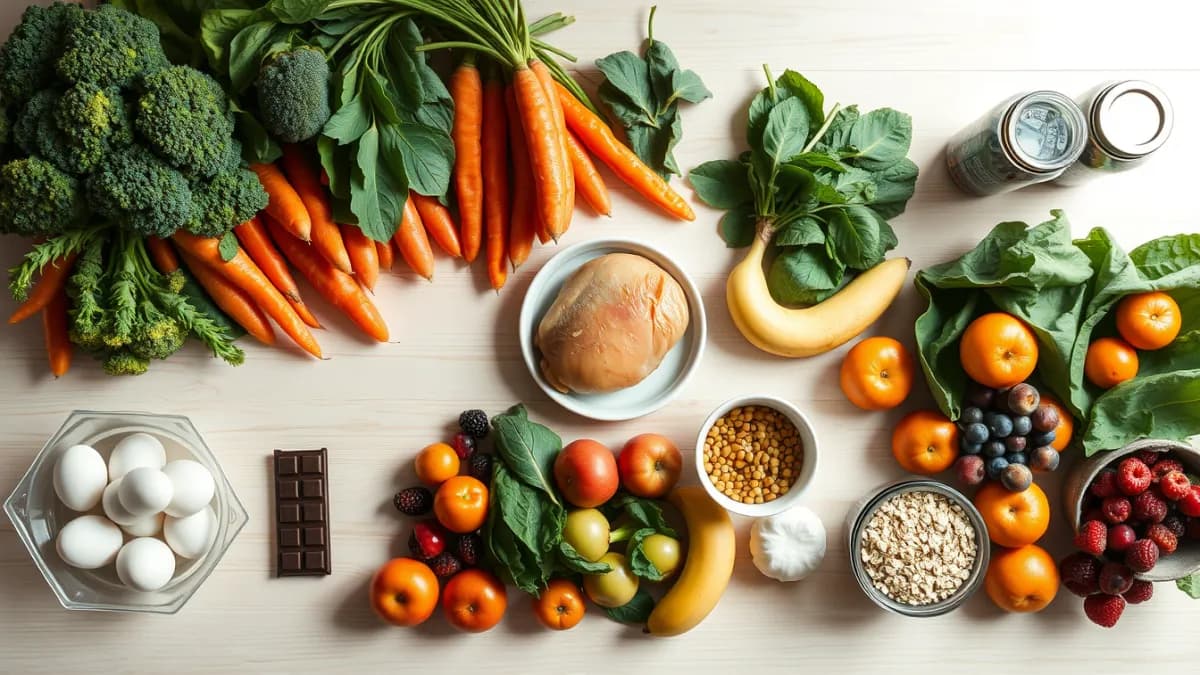
Somewhere between "just wing it" and "plan every meal in a spreadsheet" sits a whole family of numbered grocery rules: the 3-2-1 rule, the 3-3-3 rule, the 5-4-3-2-1 rule, and the 6-to-1 method. They all do the same job in different sizes. You decide how many items to buy from each food group before you enter the store, so the aisle stops being the place where decisions happen.
This page is the map of that family. Below you'll find every rule at a glance, a short definition of each, and a straightforward way to pick the one that fits your household. For the two most popular rules we also have full deep-dive guides, linked as you go.
The grocery rules at a glance
| Rule | The formula | Total items | Best for |
|---|---|---|---|
| 3-2-1 | 3 vegetables, 2 proteins, 1 carb | 6 | Solo cooks, light weeks, top-up shops |
| 3-3-3 | 3 vegetables, 3 proteins, 3 carbs | 9 | One or two people, tight budgets |
| 5-4-3-2-1 | 5 vegetables, 4 fruits, 3 proteins, 2 carbs, 1 treat | 15 | Families, balanced full-week shops |
| 6-to-1 | 6 vegetables, 5 fruits, 4 starches, 3 proteins, 2 sauces, 1 extra | 21 | Bigger households, batch cooking |
Every rule counts distinct items, not portions or packages. A bag of carrots is one vegetable; two bags of carrots is still one vegetable choice.
What is the 3-2-1 rule for groceries?
The 3-2-1 rule is the lightest member of the family: pick three vegetables, two proteins, and one carbohydrate staple for the week. Six items, one minute of thinking, and you still cover the basic structure of most home-cooked meals. It fits solo cooks, quiet weeks when the pantry is already stocked, or a quick mid-week top-up shop where a full list would be overkill.
One thing worth knowing: "3-2-1" also names a daily eating pattern — three meals, two snacks, and one treat per day — popularized by weight-loss plans. If you came here from that angle, the shopping version is the one that fills your cart; the eating version tells you when to empty it.
What is the 3-3-3 rule for groceries?
With the 3-3-3 rule (you'll also see it written as the "333 grocery list"), you choose three items from each of three food groups — most commonly three vegetables, three proteins, and three carbohydrate staples, though some versions build it from carbs, proteins, and fats instead. Those nine ingredients become the backbone of the week, combined and recombined across meals.
The 3-3-3 rule trades variety for simplicity, which makes it a favorite for one- or two-person households and tight budgets. We cover the full method — examples, who it fits, and where it feels restrictive — in our dedicated guide to the 333 grocery shopping method .
What is the 5-4-3-2-1 grocery rule?
The 5-4-3-2-1 rule (sometimes called the 54321 grocery method) is the best-known of the group: five vegetables, four fruits, three proteins, two carbohydrate staples, and one fun item. Fifteen items that add up to a balanced, full week of food — with a treat deliberately built in so the method doesn't feel like a punishment.
Because it includes fruit and the planned indulgence, 5-4-3-2-1 is the easiest rule for families to sustain long term. Our complete guide to the 5-4-3-2-1 grocery rule walks through a sample list with real prices, scaling for a family, and common mistakes. If you came here looking for the 5-3-10-5 method from TikTok, that one is a different list (5 proteins, 3 carbs, 10 fruits and vegetables, 5 flavor builders) and has its own guide .
What is the 6-to-1 grocery method?
The 6-to-1 method is chef Will Coleman's countdown variation, first proposed as six vegetables, five fruits, four starches, three proteins, two sauces, and one "extra" item you simply feel like having. As covered in TODAY , the idea went viral because the countdown is easy to remember in the store.
At 21 items, it is the most generous rule of the family, suited to bigger households and people who batch cook. The two sauces are the distinctive touch: they push you to flavor what you buy instead of leaving vegetables to die plain in the crisper.
Put this method to work
Generate a week of recipes from what's already in your fridge, or grab the printable grocery list.
How the rules differ (and how they don't)
Strip away the numbers and all four rules are the same trick: they move decisions out of the supermarket, where hunger, fatigue, and store layout work against you, and into a calm minute at home. What actually differs is scale and coverage:
- Item count grows from 6 (3-2-1) to 9 (3-3-3) to 15 (5-4-3-2-1) to 21 (6-to-1). More items means more variety and fewer mid-week gaps, but also more decisions and a bigger bill.
- Fruit only appears from 5-4-3-2-1 upward. The smaller rules assume you'll add fruit ad hoc or skip it.
- The treat is explicit in 5-4-3-2-1 and 6-to-1. The smaller rules leave indulgence out, which some people find clean and others find unsustainable.
- Sauces are unique to 6-to-1, a nod to the fact that seasoning is what makes repeated ingredients feel like different meals.
None of the rules tells you quantities. Three proteins could mean six eggs or sixty; that answer only comes from knowing which meals you'll actually cook.
Which grocery rule should you pick?
Start from your household, not from the rule:
- You cook for yourself and shop fast: start with 3-2-1. If you keep running out of food by Thursday, graduate to 3-3-3.
- One or two people, budget first: 3-3-3. Nine versatile items keep waste near zero.
- A family that wants balance without a spreadsheet: 5-4-3-2-1. The fruit category and the fun item are what make it stick beyond week two.
- A big household or a batch cooker: 6-to-1, and treat the two sauces as your flavor plan for the week.
There is no prize for picking the "right" rule. Plenty of people alternate — 5-4-3-2-1 for a normal week, 3-2-1 when the freezer is full. The rule that works is the one you repeat.
Where every counting rule falls short
Item counts answer what categories to buy, but not how much of each item, and not which meals those items become. That gap is where most attempts quietly fail: you buy your five vegetables, and half of them wilt because no meal ever claimed them.
This is exactly the layer MenuMagic adds. Plan Rules has a dedicated option for the 5-4-3-2-1 and 333 methods, so the week's meal plan is generated within your chosen rule — and the shopping list, with real quantities, organized by aisle, falls out automatically. You keep the calm structure of a counting rule and lose the guesswork about amounts.
FAQ: what is the 3-2-1 rule for groceries?
Pick 3 vegetables, 2 proteins, and 1 carbohydrate staple for the week — six core items, ideal for solo cooks and top-up shops. The same name is also used for a daily eating pattern of 3 meals, 2 snacks, and 1 treat, so check which version a source means.
FAQ: what is the 3-3-3 rule for groceries?
Three items from each of three food groups — most commonly 3 vegetables, 3 proteins, and 3 carbs; some versions use carbs, proteins, and fats. Nine ingredients that anchor the entire week. Full guide: the 333 grocery shopping method .
FAQ: what is the 5-4-3-2-1 grocery rule?
Buy 5 vegetables, 4 fruits, 3 proteins, 2 carbs, and 1 fun item each week. Counts refer to distinct items, not portions. Full guide with a sample list: the 5-4-3-2-1 grocery rule .
FAQ: which grocery shopping rule should I pick?
Match the rule to your household size and budget: 3-2-1 for the smallest shops, 3-3-3 for one or two people, 5-4-3-2-1 for families, 6-to-1 for big households and batch cooking. They all cut decision fatigue; pick the one you can repeat weekly.
Final thoughts
The numbered grocery rules are one idea wearing four different jackets: decide the shape of your cart before the store decides it for you. Start with the size that matches your household, borrow pieces from the others as needed, and let a meal plan turn your counted items into actual dinners.
Put this method to work
Generate a week of recipes from what's already in your fridge, or grab the printable grocery list.
More posts
 MenuMagic
Recipes
Vegan recipes
Vegetarian recipes
Keto recipes
Protein recipes
Lactose-free recipes
Gluten-free recipes
Low glycemic index recipes
Resources
Blog
Recipe Generator
Leftovers Recipe Generator
Printable Shopping List
Kitchen Measurement Converter
Calorie Calculator
Seasonal Fruits and Vegetables
Our other apps
WindNow
Our other apps
WindNow


© 2026 MenuMagic.
All rights reserved.